


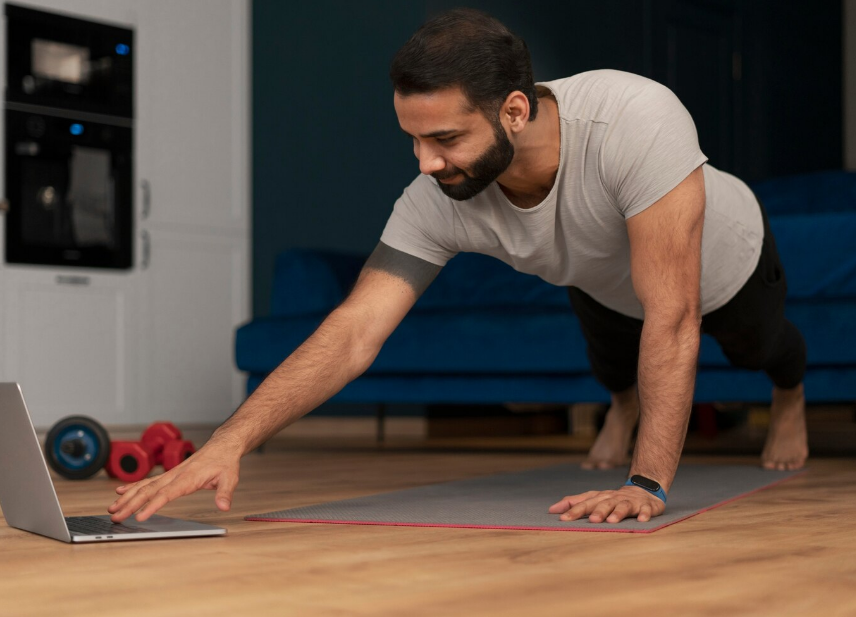
Starting a fitness journey often comes with a barrage of misconceptions. The most prevalent is the idea that effective exercise requires expensive gym memberships, bulky equipment, or grueling routines that leave the body aching for days. For individuals who are just beginning to prioritize their physical health, or for those returning to movement after a long hiatus, these misconceptions can create overwhelming barriers. Fortunately, human physiology does not strictly require heavy iron or high-intensity jumping to build strength, improve cardiovascular health, and enhance overall mobility.
Low-impact, equipment-free home workouts offer an accessible, sustainable, and highly effective alternative. By leveraging body weight and focusing on controlled movements, beginners can build a robust foundation of fitness. This comprehensive guide explores the science, mechanics, and practical application of low-impact home workouts, providing a complete roadmap for building a healthier body without stepping foot outside the living room.
The Science and Physiology of Low-Impact Exercise
To understand the value of low-impact workouts, it is necessary to examine how physical forces interact with the human body. In biomechanics, “impact” refers to the force exerted on the body when it collides with a surface. During high-impact activities like running or plyometric jumping, both feet leave the ground simultaneously. When the body lands, the joints—particularly the ankles, knees, and hips—must absorb forces equivalent to three or four times the individual’s body weight.
While connective tissues and bones can adapt to these forces over time, a beginner’s body is often unequipped to handle such sudden stress, leading to inflammation, shin splints, or joint pain. Low-impact exercises, by definition, require at least one foot to remain in contact with the ground at all times. This significantly reduces the sheer force placed on the skeletal system. According to the Centers for Disease Control and Prevention (CDC) guidelines on physical activity, low-impact aerobic and muscle-strengthening activities are highly recommended for adults to maintain health without the high risk of injury associated with high-impact sports.
Crucially, “low impact” does not equate to “low intensity.” It is entirely possible to elevate the heart rate, induce a sweat, and fatigue the muscles using smooth, grounded movements. By manipulating the speed of the exercise, the duration of the effort, and the rest periods between sets, a low-impact routine can challenge the cardiovascular system just as effectively as a heavy jog.
Why Zero-Equipment Workouts Are Ideal for Beginners
Eliminating equipment from a fitness routine does more than just save money; it fundamentally changes the way the body learns to move.
Developing Proprioception and Kinesthetic Awareness
When using exercise machines, the body is often locked into a fixed plane of motion. The machine does the work of stabilizing the weight. In contrast, bodyweight exercises force the nervous system to coordinate multiple muscle groups simultaneously to maintain balance. This develops proprioception—the body’s ability to sense its location, movements, and actions in space. A robust sense of proprioception translates to better balance and coordination in daily life, reducing the risk of falls and injuries. Harvard Medical School frequently highlights bodyweight training as a premier method for improving the mind-muscle connection and preserving functional independence.
Unmatched Consistency and Accessibility
The primary reason fitness regimens fail is a lack of consistency. Friction—such as driving to a gym, waiting for machines, or setting up complex equipment—derails motivation. A zero-equipment home workout removes all logistical friction. The living room floor, a comfortable set of clothes, and twenty minutes are the only prerequisites. This high level of accessibility makes it significantly easier to build a habit, which is the cornerstone of any physiological adaptation.
Creating a Safe Environment
When training at home without equipment, the risk of acute injury is drastically minimized. There are no heavy weights to drop and no complex machinery to operate incorrectly. The resistance is limited to the individual’s body weight, making it a naturally self-limiting practice; if a muscle fails, the individual simply returns to a resting position safely on the floor.
Essential Low-Impact Exercises: A Biomechanical Breakdown
A well-rounded routine targets all major movement patterns: pushing, pulling, squatting, hinging, and core stabilization. The following exercises form the foundation of an effective equipment-free routine.
1. The Bodyweight Box Squat (or Chair Squat)
The squat is a fundamental human movement, essential for sitting, standing, and lifting objects from the ground. It primarily targets the quadriceps, hamstrings, and gluteal muscles.
- Execution: Stand a few inches in front of a sturdy chair with feet shoulder-width apart. Initiate the movement by pushing the hips backward, as if reaching for the seat. Keep the chest lifted and the back straight. Lower the body slowly until the glutes lightly tap the chair, then drive through the heels to return to a standing position.
- Expert Insight: Beginners often make the mistake of initiating a squat by bending the knees forward, which places undue stress on the patellar tendon. Focusing on the “hip hinge” ensures the workload is properly distributed to the posterior chain. The American Council on Exercise (ACE) exercise library notes that keeping the weight shifted toward the heels is vital for proper squat biomechanics.
2. The Glute Bridge
Modern sedentary lifestyles often lead to “gluteal amnesia,” a condition where the glute muscles become weakened and underactive from prolonged sitting. The glute bridge directly counteracts this, strengthening the hips and providing stability to the lower back.
- Execution: Lie flat on the back with knees bent and feet flat on the floor, hip-width apart. Rest arms at the sides. Squeeze the glutes and push the hips upward until the body forms a straight line from the shoulders to the knees. Pause at the top for two seconds, then slowly lower the hips back to the floor.
- Expert Insight: Avoid hyperextending the lower back at the top of the movement. The lift should come entirely from the contraction of the glute muscles, not from arching the spine.
3. Incline Push-Ups
Standard push-ups are often too difficult for beginners, leading to poor form and potential shoulder impingements. Elevating the hands reduces the percentage of body weight being lifted, making the exercise manageable and highly effective for developing the chest, shoulders, and triceps.
- Execution: Stand facing a sturdy wall, countertop, or heavy table. Place hands slightly wider than shoulder-width apart on the surface. Step the feet back so the body is at a slight angle, forming a straight line from head to heels. Lower the chest toward the surface by bending the elbows at a 45-degree angle to the body. Push back up to the starting position.
- Expert Insight: As strength increases, the angle can be decreased. Moving from a wall to a countertop, then to a low couch, provides a clear path of progressive overload before attempting a full floor push-up.
4. The Bird-Dog
Core strength is not about achieving visible abdominal muscles; it is about stabilizing the spine against external forces. The Bird-Dog is a premier anti-extension exercise that builds profound core stability without the spinal flexion (bending) required by traditional crunches.
- Execution: Begin on the floor on all fours, with hands directly under the shoulders and knees under the hips. Maintain a neutral spine. Simultaneously extend the right arm straight forward and the left leg straight backward. Keep the hips parallel to the floor—do not let them twist. Hold the extended position for three seconds, then return to the starting position and switch sides.
- Expert Insight: Imagine balancing a glass of water on the lower back during the movement. The Cleveland Clinic’s guide to core exercises emphasizes that stability and control are far more important than the height of the lifted arm or leg.
5. Reverse Lunges
Lunges are excellent for unilateral (single-leg) strength and balance. However, stepping forward into a lunge requires the front knee to act as a sudden brake, which can be uncomfortable for beginners. Reverse lunges shift the momentum backward, making them much gentler on the knees.
- Execution: Stand tall with feet together. Take a controlled step backward with the right foot. Lower the hips until both knees are bent at approximately a 90-degree angle. The back knee should hover just above the floor, and the front knee should remain aligned over the front ankle. Push off the back foot to return to the starting position.
6. Low-Impact Cardiovascular Movements
Cardio does not require a treadmill. Stringing together continuous, low-impact movements keeps the heart rate elevated within a safe, effective zone. Johns Hopkins Medicine identifies regular aerobic exercise as a primary factor in lowering blood pressure and improving heart function.
- Step-Jacks: A variation of the jumping jack. Instead of jumping, step the right foot out to the side while raising both arms overhead. Step back to the center and lower the arms. Repeat with the left foot. Move at a brisk pace.
- Skater Taps: Start in a slight squat. Step wide to the right, sweeping the left foot behind the right leg while gently tapping the floor with the left hand. Immediately step wide to the left, sweeping the right foot behind. This side-to-side motion elevates the heart rate while building lateral hip strength.
Structuring a Weekly Workout Routine
Knowing the exercises is only half the equation; organizing them into a structured routine ensures continuous progress and prevents overtraining. For beginners, a full-body routine performed three times a week is highly effective. This allows for adequate stimulus to the muscles while ensuring 48 hours of recovery between sessions.
The Dynamic Warm-Up (5 Minutes)
Never start a workout with cold muscles. A dynamic warm-up increases blood flow, lubricates the joints, and prepares the nervous system for exertion.
- Arm circles (forward and backward)
- Torso twists
- High knee marches (in place)
- Ankle rolls
The Circuit (15–20 Minutes)
Circuit training involves moving from one exercise to the next with minimal rest, maximizing both muscular endurance and cardiovascular output.
- Chair Squats: 10-12 repetitions
- Incline Push-Ups: 8-10 repetitions
- Step-Jacks: 30 seconds
- Glute Bridges: 12-15 repetitions
- Bird-Dog: 8 repetitions per side
- Rest for 60 to 90 seconds after completing all five exercises. Repeat the entire circuit 3 to 4 times.
The Cool-Down (5 Minutes)
Cooling down allows the heart rate to return to its resting state gradually. This is the optimal time for static stretching, as the muscles are warm and pliable. Holding stretches for the hamstrings, chest, and calves for 30 seconds each will improve long-term flexibility and reduce muscular tension. According to the Mayo Clinic’s guidelines on stretching, stretching after a workout helps maintain range of motion in the joints, which naturally declines with age.
Low-Impact vs. High-Impact Exercises: Understanding the Difference
To further clarify the distinction and help individuals choose the right movements for their body, the following table compares the characteristics of low-impact and high-impact exercises.
| Feature | Low-Impact Exercise | High-Impact Exercise |
| Ground Contact | At least one foot remains on the ground at all times. | Both feet leave the ground simultaneously (flight phase). |
| Joint Stress | Minimal. Safe for knees, ankles, and hips. | High. Requires strong connective tissue to absorb shock. |
| Cardio Output | Moderate to High (dependent on pace and rest periods). | Very High (rapidly elevates heart rate). |
| Noise Level | Silent. Ideal for upper-floor apartments and early mornings. | Noisy. Heavy landings can disturb others. |
| Beginner Suitability | Excellent. Builds a foundation safely. | Poor. Requires prior strength and conditioning. |
| Examples | Step-jacks, squats, reverse lunges, modified planks. | Box jumps, burpees, sprint intervals, jumping jacks. |
Mastering Progressive Overload Without Equipment
A common concern regarding bodyweight training is how to continue making progress once an exercise becomes easy. In weightlifting, one simply adds more weight to the bar. In bodyweight training, individuals must apply the principle of “progressive overload” through alternative methods. The American College of Sports Medicine (ACSM) confirms that manipulating variables other than weight is highly effective for continual muscle adaptation.
- Time Under Tension (TUT): Slow down the movement. Instead of dropping into a squat in one second, take three full seconds to lower down, pause for one second at the bottom, and take two seconds to rise. This forces the muscles to work harder without adding a single pound.
- Decreasing Rest Periods: If resting 90 seconds between circuits feels too easy, drop the rest period to 60 seconds, then to 45 seconds. This forces the cardiovascular and metabolic systems to adapt to a higher workload.
- Increasing Range of Motion: Once a chair squat is mastered, attempt a free-standing squat, lowering the hips slightly further toward the floor, provided it can be done without pain or loss of form.
Listening to the Body: Recovery and Nutrition
Exercise is merely the stimulus for physical change; the actual strengthening and adaptation occur during rest. Beginners must respect the recovery process to avoid burnout and injury.
Understanding DOMS
Delayed Onset Muscle Soreness (DOMS) is the stiffness and minor ache felt 24 to 48 hours after a new workout. It is a natural result of microscopic tears in the muscle fibers. While severe pain indicates an injury, mild DOMS is a sign that the body is adapting. A comprehensive review published by the National Institutes of Health (NIH) on muscle recovery indicates that light, active recovery—such as walking or gentle stretching—is more effective at alleviating DOMS than complete bed rest, as movement promotes blood flow to the healing tissues.
Hydration and Nutrition Basics
Proper hydration lubricates joints and transports nutrients to fatigued muscles. Drinking water before, during, and after a workout is non-negotiable. Nutritionally, prioritizing lean proteins (which supply the amino acids necessary for muscle repair) and complex carbohydrates (which replenish glycogen energy stores) will maximize the benefits of a home workout routine.
The Importance of Sleep
Sleep is the body’s primary anabolic state. During deep sleep, the pituitary gland releases human growth hormone (HGH), which stimulates tissue growth and muscle repair. Aiming for 7 to 9 hours of quality sleep per night is just as important as the workouts themselves.
Frequently Asked Questions (FAQ)
Can I really lose weight with low-impact, bodyweight exercises?
Yes. Weight loss is fundamentally driven by a caloric deficit—expending more energy than is consumed. Low-impact circuit training elevates the heart rate, burning significant calories during the session. Furthermore, building muscle through bodyweight resistance increases the body’s basal metabolic rate (BMR), meaning more calories are burned at rest. However, exercise must be paired with mindful nutrition for substantial weight loss.
How many days a week should a beginner work out?
For a true beginner, 3 days a week is the optimal starting point. This schedule allows for a day of rest between each session, giving the nervous system and muscles ample time to recover. Once this habit is firmly established over several weeks, light activity like brisk walking or yoga can be added on rest days.
Will I build bulky muscle doing these exercises?
No. Building large, “bulky” muscles requires a specific regimen of heavy weightlifting, a caloric surplus, and years of dedicated training. Low-impact bodyweight exercises will build lean muscle, increase muscle tone, and improve overall physical firmness, but they will not create a bulky physique.
What should I do if my knees hurt during squats or lunges?
Pain is the body’s warning signal. If sharp joint pain occurs, the movement must stop immediately. First, check form to ensure the knees are not caving inward or pushing excessively past the toes. If form is correct but pain persists, reduce the range of motion. For instance, do a half-squat instead of a full squat. If joint discomfort continues, it is highly recommended to consult a physical therapist or medical professional to rule out underlying structural issues.
How do I measure the intensity of my workout without a heart rate monitor?
The “Talk Test” is a scientifically validated method for gauging exercise intensity, recommended by the American Heart Association. During moderate-intensity low-impact cardio, an individual should be able to hold a conversation, but not sing. If gasping for breath makes talking impossible, the intensity is too high. If a person can sing a song without pausing for breath, the intensity is too low.
Conclusion: Taking the First Step Toward Sustainable Fitness
The journey to better health does not require a dramatic overhaul of one’s lifestyle, nor does it demand punishing physical feats. By focusing on low-impact, equipment-free exercises, individuals can build a strong, capable, and resilient body from the comfort of their own homes. The focus must always remain on consistency, proper biomechanics, and gradual progression.
Understanding that physical fitness is a marathon, not a sprint, allows beginners to give themselves grace during the learning process. Celebrate the small victories—whether that means completing a full 20-minute circuit without stopping, finally perfecting the form of a reverse lunge, or simply noticing that climbing a flight of stairs feels effortless. The power to transform physical health lies in simple, consistent movement.

