



Freelancing in 2026 offers unprecedented flexibility, global opportunities, and access to digital tools that were unimaginable just a decade ago. At the same time, the line between work and personal life has become thinner than ever. With clients across time zones, constant notifications, and growing competition in online marketplaces, time management is no longer just a productivity skill. It is the foundation of sustainable income, mental clarity, and professional growth.
According to insights shared by the World Economic Forum, the global freelance and gig workforce continues to expand as remote work becomes mainstream, reshaping how professionals structure their schedules and careers. This shift places greater responsibility on freelancers to design their own systems for focus, planning, and accountability. Without clear time boundaries and structured workflows, productivity quickly turns into burnout.
This in-depth guide explores practical, research-backed strategies to help freelancers manage time effectively in 2026. It covers planning systems, digital tools, energy management, client communication, and long-term sustainability, offering clear, actionable advice designed for real-world application.
Why Time Management Is the Core Skill for Freelancers in 2026
Freelancers do not simply “do the work.” They handle marketing, sales calls, client onboarding, invoicing, revisions, learning new skills, and administrative tasks. Unlike traditional employees, they cannot rely on external structure. They must create it.
Research highlighted by the American Psychological Association shows that unstructured workloads and unclear boundaries significantly increase stress levels and reduce productivity. For freelancers, poor time management directly affects revenue, reputation, and health. Missed deadlines damage trust. Overworking leads to declining quality. Underplanning results in unstable income.
In 2026, successful freelancers treat time as a strategic asset. They understand that:
- Every hour has an opportunity cost
- Deep focus produces higher-value results than multitasking
- Boundaries protect both performance and mental well-being
The goal is not to work more hours. The goal is to design smarter systems.
The Modern Freelancer’s Biggest Time Traps
Before building better habits, it is essential to understand common productivity killers in today’s freelance environment.
1. Reactive Workdays
Constantly checking email, messaging apps, and project dashboards creates a reactive mindset. Instead of controlling the schedule, freelancers respond to every notification as if it is urgent. Research from Harvard Business Review frequently discusses how context switching reduces efficiency and increases cognitive fatigue.
2. Multitasking Myth
The American Psychological Association has also published findings showing that multitasking reduces productivity and increases error rates. Switching between tasks slows overall performance, even if it feels efficient in the moment.
3. Undefined Work Hours
Without clear start and stop times, freelancers may work late into the night, answer client messages at random hours, and feel constantly “on call.” Over time, this reduces creativity and focus.
4. Underestimating Project Time
Freelancers often underestimate how long tasks take, leading to overbooking and missed deadlines. This phenomenon, sometimes called the planning fallacy, affects even experienced professionals.
Recognizing these traps is the first step toward building a better system.
Strategic Planning: The Foundation of Effective Time Management
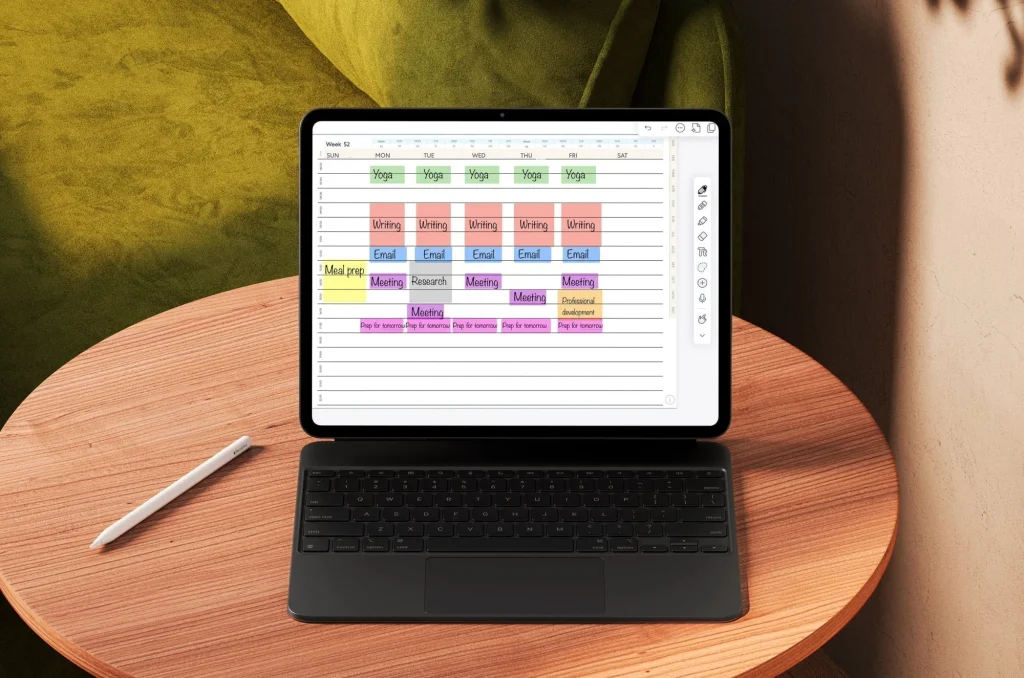
Effective time management begins long before the workday starts. It begins with structured planning.
Weekly Planning Ritual
Top-performing freelancers dedicate time each week to strategic planning. During this session, they:
- Review ongoing projects
- Break large tasks into smaller milestones
- Estimate realistic time requirements
- Schedule deep work blocks
- Leave buffer space for revisions and emergencies
Productivity research discussed by organizations such as McKinsey & Company emphasizes the importance of structured planning in improving efficiency and reducing wasted time.
A strong weekly planning system ensures that work is proactive rather than reactive.
Daily Prioritization Using the Eisenhower Matrix
The Eisenhower Matrix categorizes tasks into four groups:
- Urgent and important
- Important but not urgent
- Urgent but not important
- Neither urgent nor important
This method encourages freelancers to focus on meaningful tasks instead of constantly chasing minor requests. High-value client deliverables and skill development typically fall into the “important but not urgent” category, which often gets neglected without deliberate scheduling.
Time Blocking: Creating Focus in a Distracted World
Time blocking is one of the most effective systems for freelancers in 2026. Instead of working from a to-do list alone, the calendar becomes the primary productivity tool.
The concept involves assigning specific time slots to defined tasks, such as:
- 9:00–11:00 AM: Client A deep work
- 11:00–11:30 AM: Email and communication
- 1:00–3:00 PM: Proposal writing
- 3:30–4:00 PM: Admin tasks
Studies shared by Stanford University researchers on focus and productivity indicate that structured work intervals increase output and reduce cognitive overload.
Time blocking prevents overbooking and ensures realistic capacity planning. It also makes it easier to identify when a schedule is too crowded.
The Power of Deep Work in Freelancing
The concept of focused, distraction-free work has been widely discussed in professional productivity circles and popularized by experts such as Cal Newport in his book Deep Work. The principle remains highly relevant in 2026.
Freelancers often perform cognitively demanding tasks such as coding, writing, designing, consulting, or strategy planning. These tasks require uninterrupted focus.
To create deep work sessions:
- Turn off non-essential notifications
- Use website blockers during focus periods
- Communicate availability windows to clients
- Work in 60–90 minute uninterrupted sessions
Research from the University of California, Irvine has shown that interruptions significantly increase the time required to return to a focused state. Minimizing disruptions protects productivity.
Digital Tools That Save Time in 2026
Technology can either waste time or protect it. The key is intentional use.
Some widely adopted tools include:
- Trello and Asana for task management
- Notion for documentation and knowledge organization
- Toggl for time tracking
- Google Calendar for time blocking
According to productivity insights from Forbes, freelancers who track time consistently gain better awareness of how long tasks truly take, improving pricing accuracy and scheduling.
The objective is not to use more tools but to use fewer tools more effectively.
Energy Management: Productivity Beyond the Clock
Time management alone is incomplete without energy management. Working at peak mental hours dramatically improves output quality.
The Sleep Foundation emphasizes the direct link between sleep quality and cognitive performance. Freelancers who sacrifice rest for deadlines often experience reduced creativity and slower problem-solving.
Effective strategies include:
- Scheduling high-focus tasks during peak energy hours
- Taking structured breaks
- Maintaining consistent sleep routines
- Avoiding back-to-back cognitively demanding sessions
Energy alignment increases efficiency without extending work hours.
Setting Boundaries With Clients
Clear boundaries are essential for sustainable freelancing. Without them, work expands endlessly.
Professional communication guidelines shared by platforms like Upwork highlight the importance of setting expectations early, including:
- Defined response times
- Clear revision limits
- Structured meeting schedules
- Written scope agreements
Freelancers who establish boundaries early reduce misunderstandings and prevent last-minute stress.
Boundaries do not reduce professionalism. They increase clarity.
Comparison Table: Common Time Management Methods for Freelancers
Comparing Popular Time Management Methods for Freelancers in 2026
| Method | Best For | Strengths | Limitations | Ideal Freelancer Type |
|---|---|---|---|---|
| Time Blocking | Structured planners | Clear schedule control, realistic workload | Requires discipline | Project-based freelancers |
| Pomodoro Technique | Short bursts of work | Reduces procrastination | May interrupt deep work | Beginners building focus habits |
| Task Batching | Similar task grouping | Reduces context switching | Needs planning | Administrative-heavy roles |
| Kanban Boards | Visual thinkers | Clear task progress tracking | Can become cluttered | Creative professionals |
| Priority Matrix | Decision-making clarity | Focus on high-impact tasks | Less detailed scheduling | Strategy consultants |
Choosing the right method depends on workload, personality, and project complexity. Many freelancers combine multiple systems for optimal results.
Preventing Burnout in a Competitive Market

Burnout is one of the biggest threats to freelance longevity. According to the World Health Organization, burnout is characterized by exhaustion, cynicism, and reduced professional effectiveness.
Freelancers face unique risks due to income unpredictability and self-imposed pressure. Preventive strategies include:
- Scheduling regular non-work days
- Avoiding overbooking during high-demand seasons
- Maintaining financial buffers
- Building long-term client relationships instead of chasing constant new leads
Sustainable success depends on pacing, not constant acceleration.
Financial Time Management: Linking Hours to Revenue
Time management and financial management are closely connected. Freelancers must regularly evaluate:
- Revenue per hour
- Time spent on low-value tasks
- Time invested in skill upgrades
- Return on administrative activities
Tracking billable versus non-billable hours provides clarity. If administrative work consumes excessive time, automation or outsourcing may be necessary.
Freelancers who analyze these patterns make smarter pricing decisions and avoid undercharging.
Continuous Skill Development Without Overload
Freelancers must constantly upgrade skills to remain competitive. However, learning should be structured, not random.
Scheduling weekly learning blocks ensures growth without overwhelming the calendar. Trusted institutions such as Coursera and other accredited platforms provide structured courses that fit into planned study sessions.
Allocating dedicated time prevents skill development from interfering with client commitments.
Frequently Asked Questions (FAQ)
How many hours should freelancers work daily?
There is no universal number, but research on productivity suggests that 4–6 hours of focused deep work often produces higher-quality results than 10+ hours of scattered effort. The emphasis should be on concentrated output rather than clock time.
Is multitasking ever effective?
Most research indicates that multitasking reduces efficiency, especially for cognitively demanding tasks. Task batching is usually more effective than simultaneous task switching.
How can freelancers manage clients in different time zones?
Clear communication windows and shared calendars help manage expectations. Scheduling tools and defined response times reduce pressure to be available 24/7.
Should freelancers track every minute?
Detailed tracking during initial months helps identify time leaks and pricing inaccuracies. Once patterns are clear, tracking can be simplified but should not be completely abandoned.
What is the biggest time management mistake freelancers make?
Overcommitting to projects without realistic time estimates remains one of the most common errors. Capacity planning and buffer time are critical.
Long-Term Time Strategy for Freelancers in 2026
Freelancing is not just about daily productivity. It is about building a sustainable career.
Long-term time strategy includes:
- Building recurring revenue streams
- Prioritizing high-value clients
- Reducing dependency on urgent, low-margin work
- Creating standardized workflows
- Automating repetitive tasks
Strategic time allocation determines career trajectory. Those who spend time building systems and relationships often experience more stability and higher income over time.
Conclusion: Designing a Freelance Career That Works for You
Time management in 2026 is about clarity, structure, and intention. Freelancers operate in an environment filled with opportunity but also distraction. Without systems, schedules collapse into reactive chaos. With structured planning, deep work sessions, boundary-setting, and regular evaluation, freelancers transform scattered effort into sustainable growth.
Effective time management does not mean rigid control over every minute. It means aligning hours with priorities, protecting focus, and building a career that supports both professional ambition and personal well-being. By combining structured planning, smart tools, energy awareness, and financial analysis, freelancers create not just productivity—but resilience.
The most successful freelancers in 2026 are not those who work the longest hours. They are those who understand that time, when managed deliberately, becomes their most powerful competitive advantage.

